What Pricing Data From 10,000+ Retailers Reveals
Ecommerce pricing data analysis from 10,000+ retailers reveals 5 patterns about how retailers compete on price. Data-backed findings you can act on.
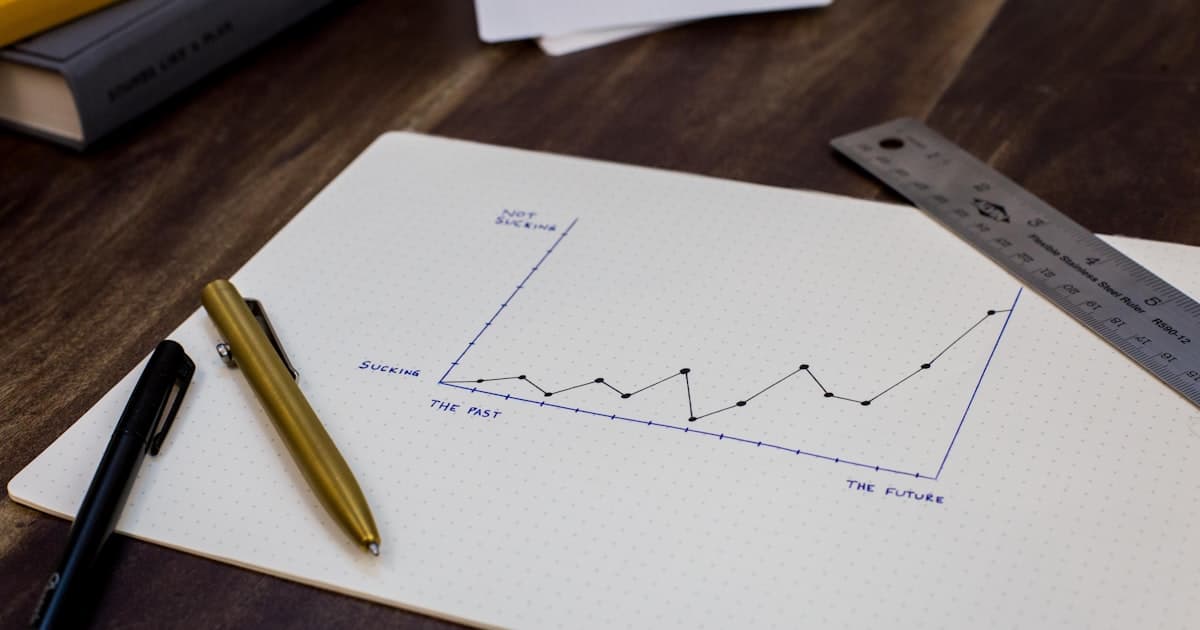
5 Pricing Data Insights That Challenge Retail Assumptions
Analysis of pricing data from 10,000+ retailers across 5 million+ products — with 3 years of historical trends — reveals patterns that challenge conventional wisdom about how retailers compete on price. These come from SellWisely's continuously collected platform data: real prices tracked across thousands of retailers, not surveys or estimates.
| Finding | Key Data Point | Practical Implication |
|---|---|---|
| Most products aren't contested | Only 20–30% of a retailer's catalog faces direct competition | Focus pricing attention on contested products, not all SKUs |
| Price changes are predictable | Adjustments start 2–3 weeks before major sale events | Build a pricing calendar from historical data |
| Nobody wins on everything | Average retailer is cheapest on only 30–40% of shared products | Weight "win rate" by product demand, not product count |
| Small retailers punch above their weight | Smaller stores undercut larger ones on specific categories | Agility matters more than scale for selective competition |
| Stock gaps create pricing windows | Out-of-stock competitors reduce pressure on remaining sellers | Monitor competitor stock status alongside price |
Finding 1: Most Retailers Only Compete on Price for a Fraction of Their Catalog
Across our dataset, the typical retailer shares only 20–30% of their product catalog with any given competitor. The rest is either unique to their store, carried by non-competing retailers, or differentiated enough (exclusive colorways, bundle deals, proprietary accessories) that direct price comparison doesn't apply.
Most pricing discussions assume you're competing on every single SKU. You're not. If you're spending equal time monitoring prices on all 500 of your products, you're over-investing in the 350+ where you have no direct competition and under-investing in the 100–150 where price is the deciding factor.
Start by identifying your "contested products" — the ones where 3 or more competitors sell the exact same item. These are where your pricing decisions directly affect sales volume. For everything else, your pricing is driven by demand, cost, and brand positioning, not competitive pressure.
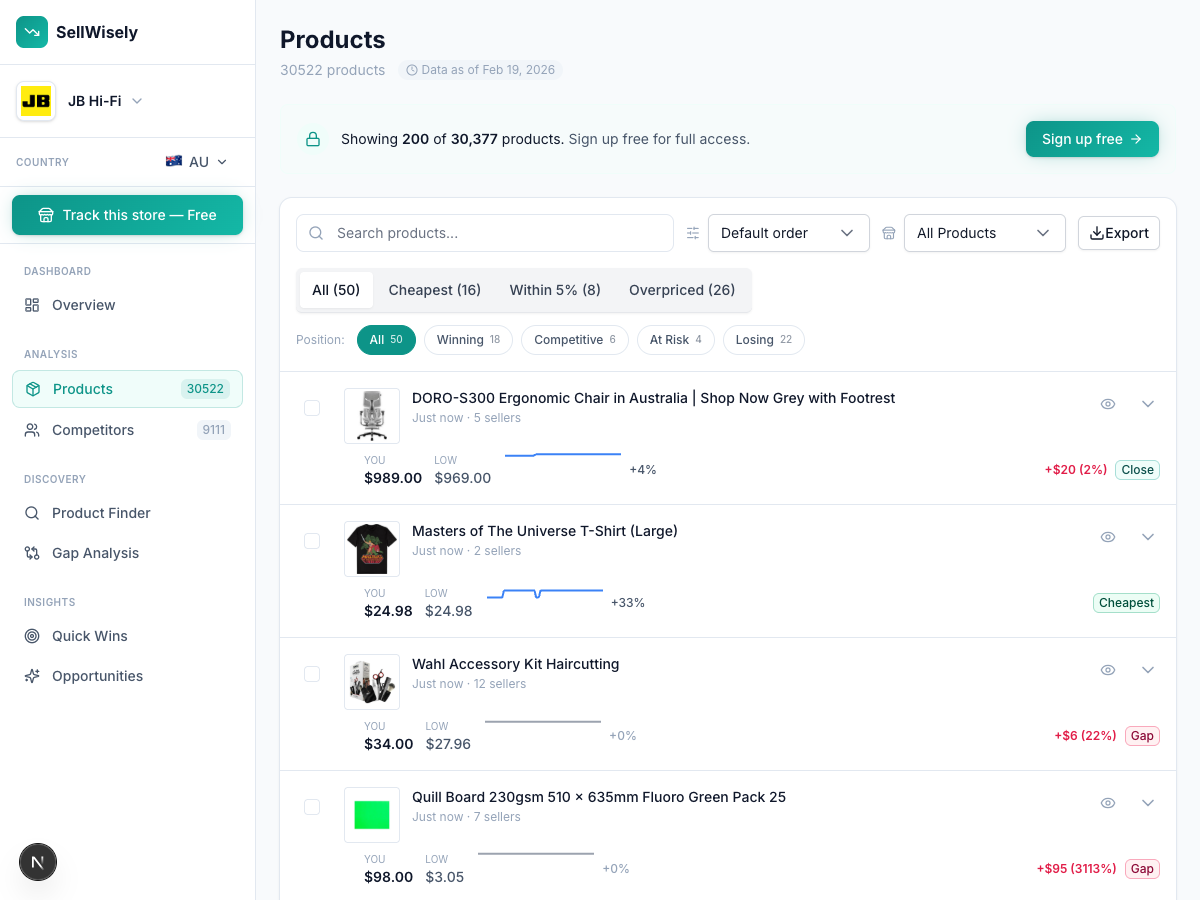
Finding 1: Contested vs Uncontested Only 20–30% of a typical catalog faces direct competition. 70–80% of products have no price pressure at all.
Finding 2: Price Changes Cluster Around Predictable Events
Retail pricing isn't random. Across our data — consistent with Australian Retailers Association seasonal reporting — price changes cluster heavily around specific calendar events. The weeks surrounding major sale periods (Black Friday, Boxing Day, end-of-financial-year) account for a disproportionate share of annual price movements.
What surprised us is the lead time. Many retailers start adjusting prices 2–3 weeks before a major sale event — not on the day itself. This means that if you're only monitoring competitor prices during sale events, you're seeing the result of pricing decisions that were made weeks earlier.
There's also a clear "reset" pattern. After a sale event, prices typically don't return to their pre-sale levels immediately. There's a 1–2 week lag where prices settle into a new baseline, often slightly below the pre-sale price. Retailers who recognize this pattern and adjust their post-sale pricing accordingly avoid the trap of restoring full price while competitors haven't yet.
The practical upshot: Predictable pricing patterns mean you can plan rather than react. If you know your top 5 competitors typically start dropping prices on consumer electronics 3 weeks before Black Friday, you prepare your response in advance. Build a pricing calendar from historical data — mark when each major competitor typically initiates changes. After two years of data, you'll have a reliable playbook for when to expect competitive pressure and when to hold firm on your margins.
Finding 2: Price Clustering Competitor prices cluster 2–3 weeks before major sale events — revealing coordinated market timing.
Finding 3: The Average Retailer Is Cheapest on Only a Third of Shared Products
Across retailers in our dataset who share products with competitors, the typical retailer has the lowest price on roughly 30–40% of those shared products. On the remaining 60–70%, at least one competitor is cheaper.
That's not a failure — it's normal. No retailer is cheapest on everything, nor should they be. The interesting question isn't "am I cheapest?" but "am I cheapest on the right products?"
Retailers who are cheapest on their highest-traffic, highest-volume products tend to capture more sales than retailers who happen to be cheapest on low-demand items. Winning on price for a niche accessory nobody searches for is less valuable than being competitive on the bestseller that drives 20% of your traffic.
"Win rate" — the percentage of products where you have the best price — is a vanity metric unless weighted by demand. A 30% win rate on your top 50 products by traffic is far more valuable than a 50% win rate on your bottom 200 products. Rank your products by traffic or sales volume, check your top 20% weekly, and review the rest monthly. Your pricing attention should follow your revenue distribution.
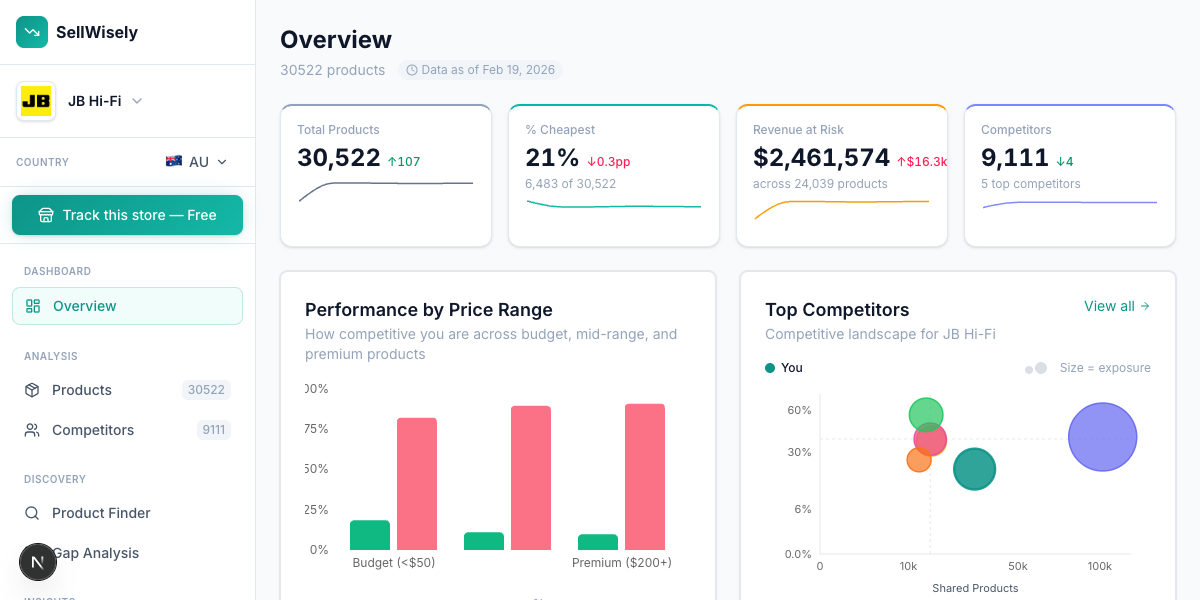
Finding 3: The Win Rate Reality 30–40% is the typical win rate for a mid-market retailer. Being cheapest on everything isn't the goal.
Finding 4: Smaller Retailers Undercut Larger Ones More Often Than Expected
A large national retailer prices a TV at $899 with a 25% margin. A smaller online-only retailer lists the same model at $849 with a 15% margin — and is still profitable. This happens across our data more often than conventional wisdom would suggest.
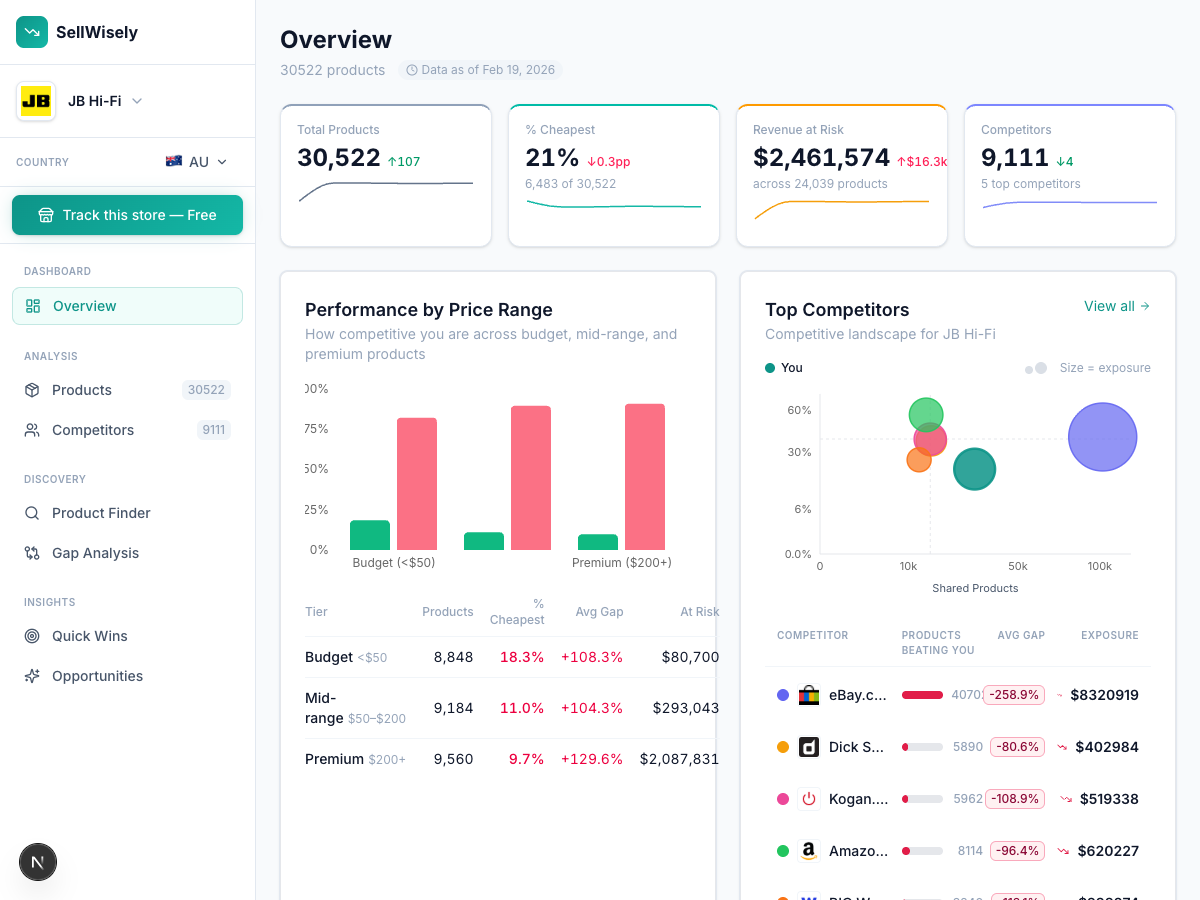
Smaller retailers — those with narrower catalogs and less brand recognition — regularly undercut larger competitors on specific product categories. The pattern is especially visible in electronics, home improvement, and sporting goods. Lower overhead (no physical stores, lean staff, warehouse-only operations), opportunistic buying (closeouts, direct imports, overstock), and willingness to accept thinner margins all contribute. This pattern aligns with findings from the Australian Bureau of Statistics retail trade data, which shows online-only retailers growing share in categories where price sensitivity is highest.
The takeaway for smaller retailers: You don't need the lowest cost structure to compete on price. You need agility — the ability to spot opportunities and adjust pricing faster than retailers with multi-week pricing review cycles. Monitor your larger competitors' prices on your best-selling products. When their prices are set high (often due to slow internal review processes), you have a window to capture sales at a still-profitable but more competitive price point.
Finding 4: The Underdog Advantage Smaller retailers consistently undercut larger ones — size doesn't guarantee the best price.
Finding 5: Stock Availability Gaps Create Pricing Opportunities
One of the most actionable patterns in our data: when a competitor goes out of stock on a product, the remaining retailers who still have stock often adjust their prices upward within days.
This makes economic sense. If three retailers sell the same product and one goes out of stock, the remaining two face less competitive pressure. Demand that would have gone to the out-of-stock retailer now has fewer options. Prices adjust accordingly.
We see this pattern most clearly in seasonal products, limited-edition items, and categories with supply chain constraints. During periods of widespread supply shortages, the retailers with inventory essentially set the market price.
Competitor stock monitoring is just as valuable as competitor price monitoring. When a major competitor runs out of your bestselling product, resist the urge to cut your price. The opposite response — holding firm or modestly increasing — often yields better margin without sacrificing volume, because the competitive dynamics just shifted in your favor.
Finding 5: Stock Gaps Create Windows When competitors go out of stock, pricing windows open. Monitoring stock status is as valuable as monitoring prices.
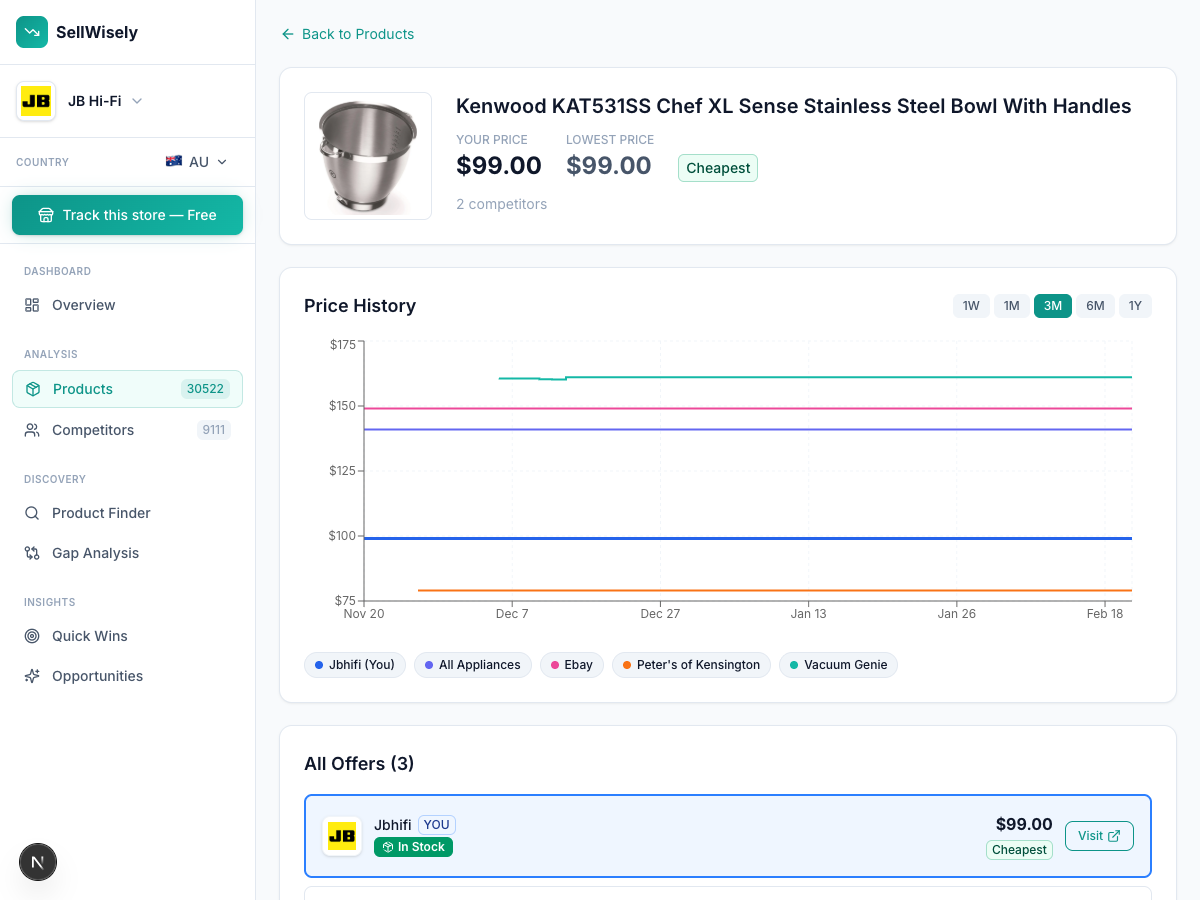
Turning Data Into Pricing Decisions
These five findings point to a common theme: effective pricing requires data, but the data most retailers lack isn't "what are my competitors charging right now?" It's the longitudinal, multi-competitor view that reveals patterns.
Single-point price checks ("Competitor X charges $49.99 today") are useful but limited. The real value comes from tracking how prices move over time across your competitive set — which products are genuinely contested, when competitors typically adjust, and how stock availability creates pricing windows.
This is the kind of intelligence that's nearly impossible to build manually. A spreadsheet shows you today's prices. Three years of historical data shows you pricing patterns.
If you're making pricing decisions based on gut feel or weekly spot-checks of 2–3 competitors, you're leaving margin on the table. Not because your instincts are wrong — after years in retail, your instincts are probably solid. But because the data often reveals patterns your instincts can't detect: the subtle pre-sale price drops, the post-stockout adjustments, the long-term trends that emerge only across months of observation.
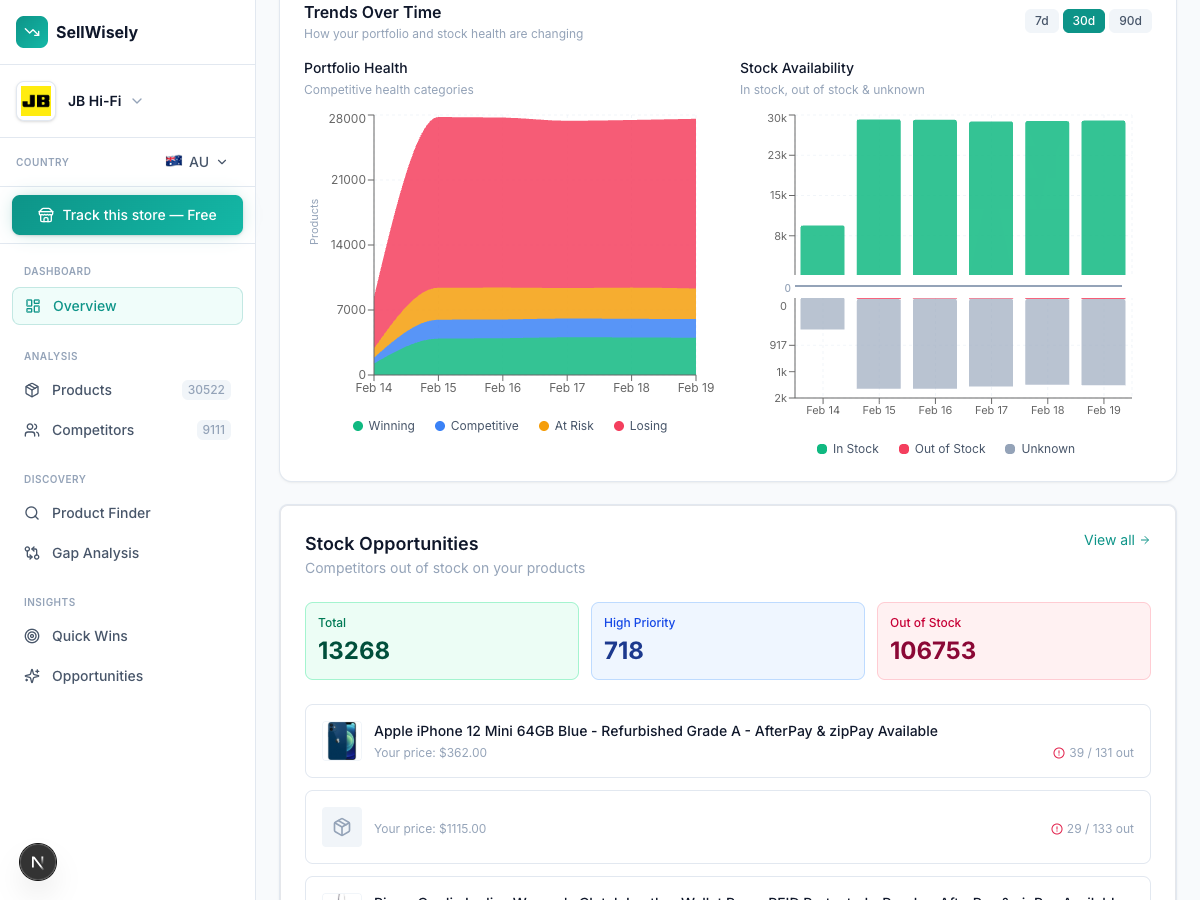
See How Your Pricing Compares
These patterns play out differently in every category. The specifics depend on your products, your competitors, and your market. SellWisely gives you instant access to competitive pricing data across thousands of retailers — including 3 years of historical pricing trends — so you can see which of these patterns apply to your store.
For a practical guide on getting started with competitor price tracking, see our complete guide to tracking competitor prices.
Curious where your prices stand? Start free with SellWisely — enter your store URL and see your competitive positioning in seconds. No setup, no credit card.
Ready to track your competitors' prices?
Enter your store URL and see competitor prices instantly. No signup required.
Try SellWisely Free